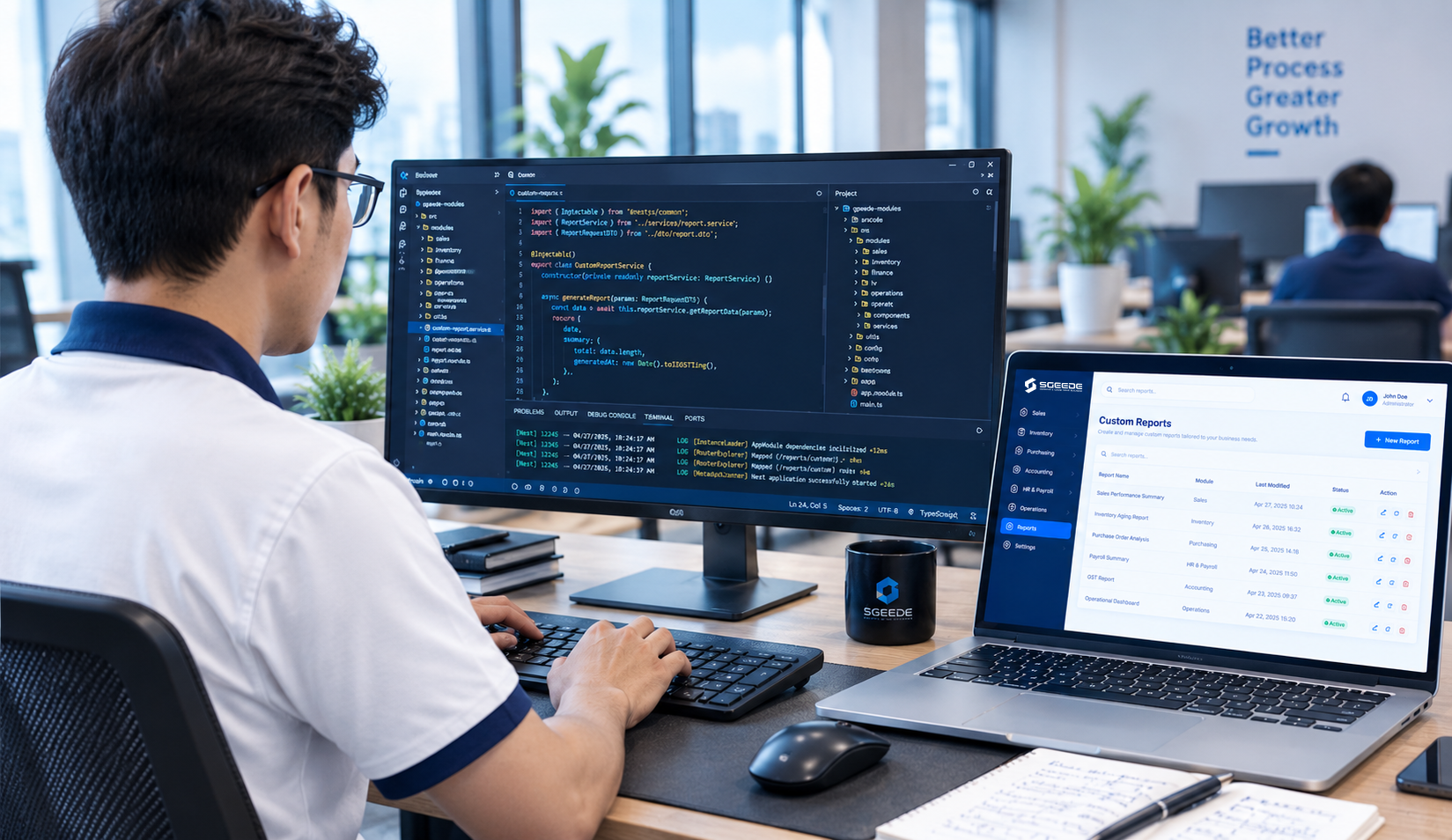
For Singapore SMEs, that usually means fewer manual errors, faster month-end closing and a clearer view of stock and cash. This guide explains what ERP software does, the signs your business needs one, and how to choose the right system and partner.
What does ERP software do?
ERP software replaces disconnected tools with one integrated platform. A sales order, for example, can reserve stock, trigger a delivery and create an invoice that flows straight into accounting.
With ERP, SMEs can:
- Centralise customer, product, supplier and financial data.
- Reduce repetitive manual data entry between departments.
- Track inventory and financial transactions in real time.
- Produce consistent reports for management.
- Give each team access to the information it needs, with the right permissions.
5 signs your SME needs an ERP system
1. Your systems don't talk to each other
If sales, warehouse and finance each use different tools, the same data gets entered several times. An ERP system connects these workflows and removes the duplication.
2. You don't trust your stock numbers
Businesses with many SKUs, warehouses or locations need reliable stock data. ERP inventory management tracks receipts, transfers and deliveries as they happen.
3. Month-end closing takes too long
When accounting is disconnected from sales and purchasing, finance teams spend days reconciling. Learn more about the benefits of integrating sales, inventory and accounting.
4. Quotations and purchase orders get lost
When quotations, customer orders and supplier records live in emails and spreadsheets, follow-ups are missed. ERP keeps the whole order-to-cash and procure-to-pay process in one place.
5. Management decisions rely on guesswork
If reports take days to compile, decisions are made on old data. Centralised ERP reporting gives owners a live view of the business.
Key ERP modules for SMEs
Module | What it handles |
|---|---|
Sales & CRM | Leads, quotations, customer orders |
Purchasing | Suppliers, purchase orders, vendor bills |
Inventory | Stock movements, warehouses, barcode scanning |
Accounting | Invoices, payments, GST reporting, financial statements |
Manufacturing | Bills of materials, production planning, work orders |
HR & Payroll | Employee records, leave, payroll |
Manufacturers should also look at manufacturing ERP features such as material requirements planning (MRP).
Cloud ERP vs on-premise ERP
Cloud ERP runs on hosted servers and is accessed through a browser, so there is no hardware to maintain and teams can work from anywhere. On-premise ERP runs on your own servers and gives more direct control, but needs in-house IT support. Most SMEs today start with cloud ERP for its lower upfront cost and easier scaling.
Why many SMEs choose Odoo ERP
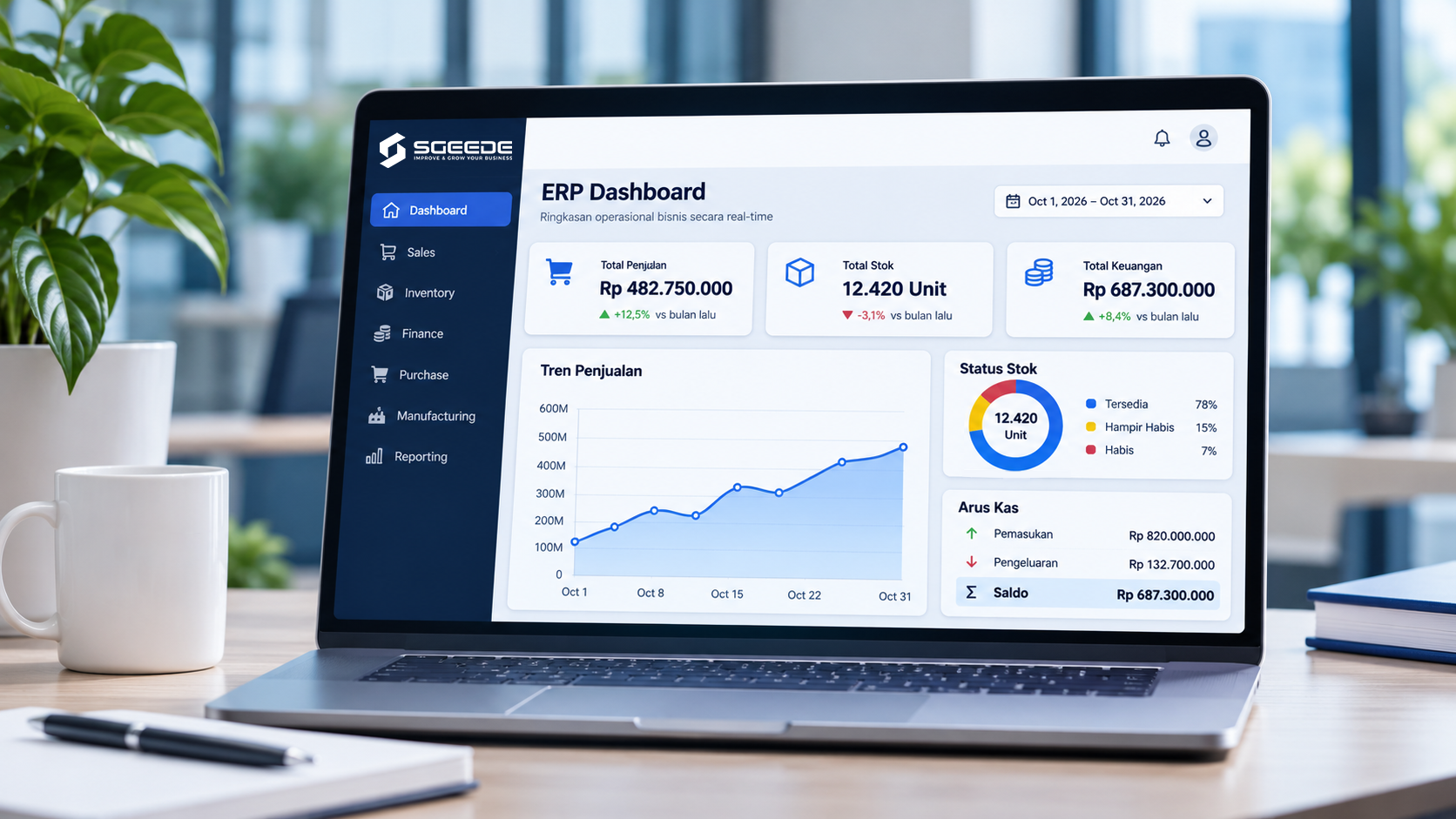
Odoo is a modular ERP platform covering sales, CRM, accounting, inventory, purchasing, manufacturing, HR and more. Businesses can start with a few modules and add more as they grow. With the right setup, Odoo connects workflows that would otherwise need several separate systems.
The actual scope depends on the modules selected, the configuration and any custom development required.
How to choose an ERP partner in Singapore
- Business understanding: does the partner understand how your operations actually work?
- Technical capability: can the team configure, customise and integrate the modules you need?
- Clear methodology: is there a defined process for requirements, testing and go-live?
- Training and support: will your staff be supported after go-live?
- Local requirements: can the system handle GST, CPF and other Singapore requirements?
See how SGEEDE delivers Odoo implementation services in Singapore.
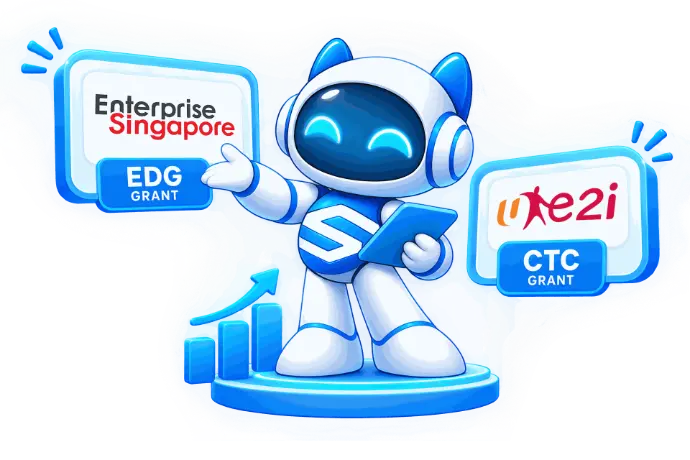
Can grants help fund an ERP project?
Singapore SMEs may be able to offset part of the cost of a transformation project through government grants such as the Enterprise Development Grant (EDG). Eligibility and support levels depend on the project and current grant rules, so check before you start.
The best ERP depends on your industry, budget, workflows and integration needs. Compare functionality, local support, scalability and total cost of ownership before deciding.
Cost depends on the licensing model, number of users, modules, customisation, hosting and support. Request a quotation based on your actual requirements.
No. Modular cloud ERP lets small and medium businesses start with the modules they need and expand later.
It depends on scope, data migration, customisation, integrations and user readiness. A realistic timeline should be set after a requirements review.
Explore ERP software with SGEEDE
Running your business across disconnected systems slows growth. Discover how SGEEDE's ERP software in Singapore connects your sales, inventory and finance in one system.
Get a free demo and see how ERP can work for your business.