What Is ERP Accounting Software?
ERP accounting software is a financial management solution that connects accounting with other core business operations, such as sales, purchasing and inventory. It allows information to flow between departments, reducing the need to enter the same data into multiple systems.
Unlike standalone accounting software, it operates as part of an integrated enterprise resource planning system. This means financial records can be updated alongside business transactions, helping teams maintain more consistent information across the organisation.
For example, when a sales order is confirmed, the related financial information can be connected to invoicing and inventory processes. Finance teams can then access relevant transaction data without relying entirely on manual updates from other departments.
ERP Accounting vs Standalone Accounting Software
Both solutions help businesses manage financial records, but they differ in how they handle information across departments.
| Standalone Accounting Software | ERP Accounting Software |
|---|---|
| Data entry may need to be repeated across separate systems. | Shared data reduces duplicate entry between connected departments. |
| Inventory information may require manual updates or separate integration. | Inventory transactions can connect directly with financial records. |
| Reporting mainly focuses on accounting information. | Reports can combine financial and operational information. |
| May require additional tools as business operations expand. | Can support additional modules and business processes as requirements grow. |
| GST reporting depends on the available accounting features and configuration. | GST reporting can be connected to sales and purchasing transactions, depending on configuration. |
A standalone solution may be sufficient for a business with straightforward accounting needs. However, when multiple departments need access to the same information, an integrated system can provide a more connected way to manage operations.
Key Features Singapore SMEs Should Look For
When evaluating an accounting solution, Singapore SMEs should consider more than just basic bookkeeping. The following features can help finance teams manage daily activities and maintain better visibility over business performance.
- GST-ready invoicing and reporting: Look for support for Singapore GST requirements, including appropriate tax configurations and reporting tools that help prepare financial information for review.
- Bank reconciliation: The system should help match bank transactions with recorded payments and receipts, making it easier to identify outstanding or unmatched entries.
- Real-time financial reports: Access essential reports such as profit and loss (P&L), balance sheets and cash flow statements to understand the organisation's financial position.
- Multi-currency and multi-company: Businesses dealing with overseas suppliers, customers or multiple legal entities should consider flexible currency and company management capabilities.
- Integration with sales, purchasing and inventory: Financial information should connect with operational activities so that invoices, supplier bills and stock movements can be tracked more consistently.
These features should be evaluated based on your existing workflows, reporting requirements and future business plans. Not every SME needs every module from the beginning.
Signs Your Business Is Ready to Move to ERP
Moving to an integrated system is not necessarily about replacing a working accounting tool. It is about recognising when existing processes are creating unnecessary administrative work or limiting business visibility.
Here are some common signs that your organisation may be ready:
- Month-end closing takes too long: Finance staff spend significant time collecting information from different departments before completing monthly reports.
- Sales and finance figures do not match: Different systems contain separate records, making it difficult to identify discrepancies and confirm the correct figures.
- Your team relies on multiple spreadsheets: Employees frequently exchange spreadsheet files to update inventory, purchasing records, customer information and financial data.
- Inventory and accounting are disconnected: Finance teams struggle to obtain accurate stock-related information without asking warehouse or operations staff for updates.
- Your business plans to expand: Opening additional branches, managing more entities or increasing transaction volumes may require a more structured way to manage business information.
If several of these situations sound familiar, it may be worth reviewing whether an integrated solution can simplify your existing processes.
How SGEEDE Helps
As an Official Odoo Partner in Singapore, SGEEDE delivers ERP software Singapore SMEs use to connect accounting, sales and inventory, with Odoo implementation, data migration and local support. Eligible companies may co-fund the project under EDG or CTC. 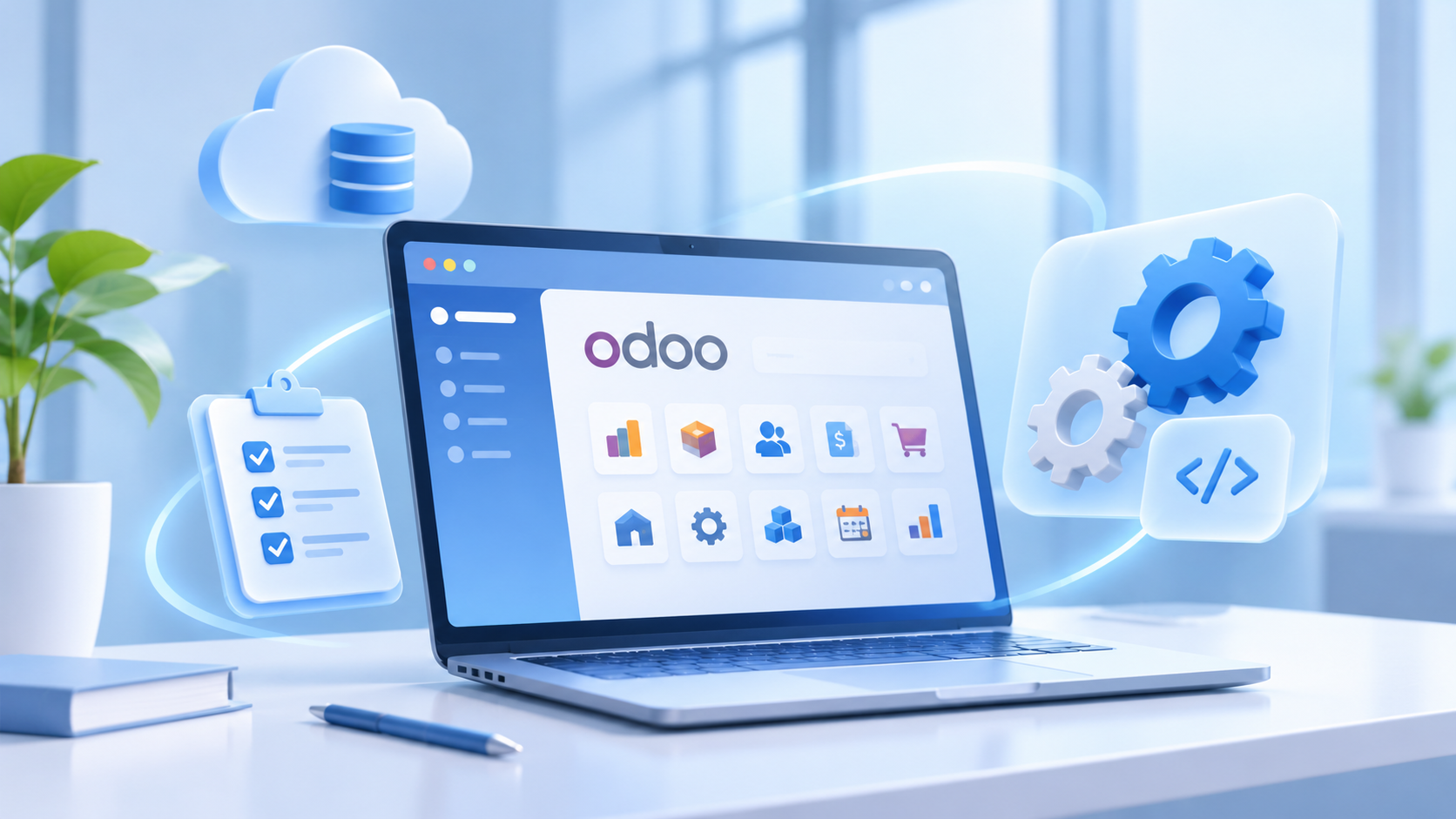
SGEEDE, operating under SG-Soft Pte. Ltd., is an Official Odoo Partner in Singapore, helping businesses implement and customise Odoo solutions to suit their operational requirements. As part of its ERP software Singapore services, SGEEDE integrates Odoo accounting with business functions such as sales, purchasing, inventory and CRM. Its in-house development team supports the process through data migration, system configuration, user training and local support, with Odoo implementation tailored to the organisation's workflows.
For eligible Singapore businesses, projects may also qualify for co-funding support through the EDG or CTC, subject to the respective programme requirements and approval. Funding eligibility and support levels should always be confirmed with the relevant administering authority.
FAQ
Yes. Small businesses can benefit from an integrated solution when they need to connect accounting with sales, purchasing or inventory management. The implementation can start with essential functions and expand as business requirements change.
Yes, systems such as Odoo can support GST-related accounting and reporting when configured appropriately for Singapore requirements. Businesses should ensure that tax settings, transaction records and reporting processes are reviewed to meet their applicable obligations.
Yes. Data from an existing accounting system can generally be migrated, depending on its format, structure and compatibility. Common records include customer details, supplier information, chart of accounts, opening balances and outstanding transactions. A migration review is important to check data accuracy before the new system goes live.
Make Your Business Accounting More Connected
Managing finances becomes easier when accounting information is connected with the rest of your business operations. The right ERP accounting software can help Singapore SMEs reduce repetitive work, improve financial visibility and build more structured processes as they grow.
Looking to understand how an integrated Odoo solution could work for your organisation? Book a free demo with SGEEDE or WhatsApp +65 8948-7790 to discuss your business requirements.