For many Singapore SMEs, customer information is scattered across spreadsheets, WhatsApp conversations and email inboxes. As the business grows, keeping track of enquiries, remembering follow-ups and maintaining accurate customer records becomes increasingly difficult. Sales teams may also struggle to coordinate with finance, resulting in inconsistent information and delayed processes.
The right customer management software Singapore businesses choose should do more than store contact details. It should help teams organise customer relationships, manage sales opportunities and connect daily activities with wider business operations. In this guide, we explore the essential CRM features, the benefits of connecting CRM with ERP, and how SGEEDE helps Singapore SMEs implement a solution that fits their workflows.
What Is Customer Management Software?
Customer management software is a digital system that helps businesses organise customer information, track interactions and manage sales activities in one central platform. It gives teams a shared view of customer relationships, from the first enquiry to ongoing service and support.
Its main functions include:
- Storing customer and contact information.
- Tracking leads and sales opportunities.
- Recording calls, emails and customer interactions.
- Managing quotations and follow-up activities.
- Monitoring sales performance and customer service.
Instead of relying on disconnected tools, businesses can work with more consistent and accessible customer information.
Why Singapore SMEs Are Switching to CRM Software?
Singapore businesses looking for CRM software Singapore solutions need a platform that supports their sales processes and customer management requirements.
For growing SMEs, customer information should be accessible across departments. A centralised CRM system helps sales representatives track enquiries, managers monitor opportunities and customer service teams access relevant interaction records.
When evaluating customer management software, businesses should consider:
- Ease of use and implementation.
- Flexible sales pipeline configuration.
- Customer data centralisation.
- Integration with accounting and inventory.
- Reporting and management dashboards.
- Scalability as the business grows.
Choosing a suitable platform helps establish a more organised approach to managing customer relationships.
Signs Your Singapore Business Needs a CRM
As customer numbers and sales activities increase, manual processes can become difficult to manage. Here are some common signs that your business may benefit from a dedicated CRM system:
- Leads are getting lost: Enquiries from different channels are not recorded consistently, making it easy to overlook potential customers.
- Follow-ups are frequently missed: Sales representatives rely on personal reminders or spreadsheets instead of a shared follow-up system.
- There is limited pipeline visibility: Managers cannot easily see which opportunities are active, pending or close to conversion.
- Reports require manual work: Sales information must be collected from multiple sources before management can review performance.
- Customer information is duplicated: Different departments maintain separate records, creating confusion over contact details and communication history.
- Sales and finance are disconnected: Teams may use different information when preparing quotations, confirming orders and issuing invoices.
If several of these situations sound familiar, introducing a structured CRM process can help your organisation improve coordination and maintain better control over customer relationships.
Key Features to Look For in Customer Management Software
Not every CRM platform offers the same capabilities. When evaluating customer management software, consider the following features and how they support your daily operations.
1. Lead & Opportunity Pipeline
A visual sales pipeline helps your team monitor every opportunity through clearly defined stages, from initial enquiry to successful closure. With structured lead management, sales representatives can identify their next actions, while managers gain better visibility into potential revenue and outstanding opportunities.
2. Customer 360° History
A centralised customer profile allows employees to access important information, including contact details, previous enquiries, quotations, purchases and communication records. This gives your team better context before contacting a customer and reduces the need to search through multiple systems.
3. Quotation to Invoice
Managing quotations separately from sales records can create unnecessary administrative work. Look for software that allows your team to prepare quotations, track customer approval and convert confirmed deals into sales orders and invoices without repeatedly entering the same information.
4. After-Sales & Customer Service
Customer relationships do not end when a sale is completed. A suitable platform should help teams record service requests, monitor outstanding issues and maintain a history of customer interactions. These capabilities support more consistent customer service management and help employees respond with the right information.
5. Reporting & Dashboards
Management needs a clear understanding of sales activities and business performance. Customisable dashboards can provide visibility into lead sources, opportunity stages, expected sales and individual team performance, making it easier to identify areas that require attention.
6. Mobile Access & Integrations
Sales teams often need customer information while travelling or meeting clients. Mobile access allows employees to review records and update activities outside the office. Integrations with email, WhatsApp and website enquiry forms can also help bring customer conversations into a more organised workflow.
Why Odoo CRM Suits Growing SMEs?
For businesses evaluating CRM for SMEs, flexibility, usability and integration capabilities are important considerations.
Odoo CRM provides tools to manage leads, track sales opportunities, organise customer information and monitor sales activities. Its modular structure also allows businesses to connect CRM with other business applications as their requirements develop.
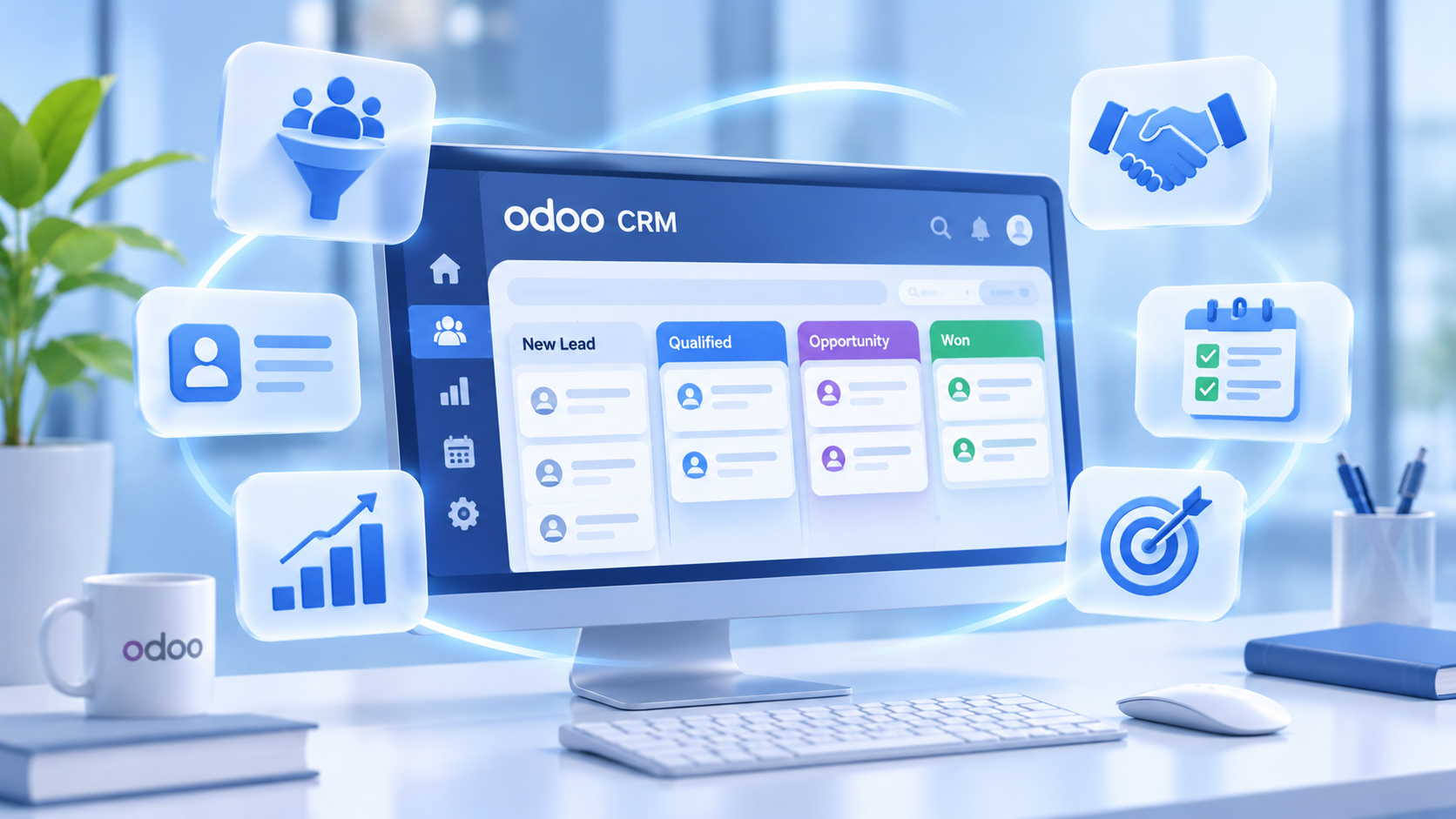
For example, a distribution company might use Odoo CRM to manage incoming enquiries, track quotations and coordinate customer orders with its inventory and accounting processes.
This allows SMEs to manage customer relationships while maintaining a more connected view of their business operations.
Why Connect Your CRM to Your ERP Software?
A standalone CRM can manage customer relationships, but connecting it to an ERP system creates a more complete view of business operations.
When CRM and ERP operate as separate systems, employees may need to transfer information manually between sales, inventory and finance. This increases administrative work and creates opportunities for inconsistent records.
With an integrated solution, the process can be more connected:
- Quotation: The sales team prepares and sends a quotation to the customer.
- Sales Order: Once approved, the quotation can be converted into a sales order.
- Inventory: Relevant stock information can be checked against current inventory records.
- Invoicing: Finance can access the sales information needed to prepare invoices.
- Delivery: Operations can coordinate fulfilment using the relevant order details.
This connected approach reduces duplicate data entry and gives departments access to more consistent information.
For Singapore businesses evaluating ERP software Singapore, choosing a platform that connects customer management with accounting, inventory and sales operations can support more efficient business management as the organisation grows.
Odoo CRM by SGEEDE: Built Around Your Workflow
Every business has different sales processes, approval requirements and customer management needs. Rather than forcing your team to adapt to a generic workflow, SGEEDE helps configure Odoo CRM around how your organisation operates.
As an Official Odoo Partner in Singapore, SGEEDE supports SMEs throughout the CRM implementation process, including:
- Process consultation: Understanding your existing sales activities, customer journey and operational challenges.
- Pipeline configuration: Setting up sales stages, lead assignment and follow-up activities according to your business requirements.
- Approval workflows: Configuring approval processes for quotations, discounts and other relevant business activities.
- Customised reporting: Building dashboards that help management monitor sales performance and business activities.
- Data migration: Moving relevant customer and sales information from existing spreadsheets or systems.
- User training: Helping employees understand the platform and use its features effectively.
- Post-go-live support: Providing ongoing assistance as your team adopts the system and identifies further improvements.
For businesses with more specific requirements, SGEEDE can also provide custom Odoo modules to extend the platform's functionality.
You can also explore our Odoo implementation services to understand how we approach system deployment and business process alignment.
With an in-house team of more than 30 developers and experience dating back to 2014, SGEEDE provides implementation, customisation, integration, training and support for Singapore businesses.
Funding Support for Singapore SMEs
Eligible Singapore companies may be able to co-fund qualifying digitalisation and business transformation projects through government support schemes.
Two programmes worth exploring include:
- Enterprise Development Grant (EDG): Eligible companies may receive funding support of up to 50% for qualifying projects, subject to the scheme's requirements and approval.
- Company Training Committee (CTC) Grant: Eligible companies may receive support of up to 70% for qualifying projects, subject to applicable conditions and approval.
Funding is not automatic, and the actual support depends on the company's eligibility, project scope and prevailing grant requirements.
SGEEDE can help your business understand the relevant funding options, check eligibility and prepare the project requirements before proceeding.
How to Get Started
Implementing a CRM system does not need to be complicated. A structured approach helps ensure the solution meets your business needs.
1. Free Consultation
Discuss your current customer management challenges, business requirements and expectations with the SGEEDE team.
2. Process Review
Review your existing sales workflow, customer data, reporting requirements and integration needs to identify areas for improvement.
3. System Setup & Data Migration
Configure Odoo CRM, establish the required workflows and migrate relevant customer information from your existing systems.
4. Training & Go-Live
Prepare your employees to use the system, test the configured processes and launch the solution with implementation support.
Frequently Asked Questions
1. What Is the Best Customer Management Software for SMEs in Singapore?
The right solution depends on your business size, sales process, integration requirements and future growth plans. SMEs looking for a connected platform may consider Odoo CRM, particularly when they also need accounting, inventory and ERP capabilities within the same system.
2. How Much Does CRM Software Cost in Singapore?
CRM software costs depend on several factors, including the number of users, subscription model, required features, customisation, integrations and implementation scope. Businesses should consider the total cost of ownership, including training, support and future system enhancements, rather than comparing subscription fees alone.
3. Can Odoo CRM Integrate with Accounting and Inventory?
Yes. Odoo CRM can work alongside Odoo's accounting, sales and inventory applications. This allows businesses to connect customer opportunities with quotations, orders, invoices and stock information within an integrated business management platform.
4. How Long Does CRM Implementation Take?
Implementation time depends on the complexity of your business processes, data migration requirements, customisation and integration needs. A relatively straightforward setup may take less time than a project involving multiple departments and specialised workflows. SGEEDE reviews these requirements before proposing an implementation timeline.
5. Can My CRM Project Be Co-Funded by Government Grants in Singapore?
Potentially, yes. Eligible Singapore companies may be able to apply for support through programmes such as EDG or CTC, depending on the project scope and applicable eligibility conditions. SGEEDE can help you check eligibility and understand the requirements, but grant approval is determined by the relevant authorities.
Manage Customer Relationships with SGEEDE
Managing customer information should not require your team to switch between multiple spreadsheets, inboxes and disconnected applications. With the right CRM solution, your business can organise leads, improve sales visibility and maintain more consistent customer relationships.
If you are exploring customer management software Singapore SMEs can use to support their growing operations, Odoo CRM offers a flexible platform that can connect customer management with wider business processes.
SGEEDE can help you assess your requirements, configure the right workflows and implement a solution that supports your business goals.
Ready to improve how your business manages customers?
Book a free demo with SGEEDE or WhatsApp us at +65 8948-7790 to discuss your CRM requirements.